Beginner Series 2: Prediction Markets vs Traditional Betting: What’s the Difference?
Comparison content that helps users understand key differences in mechanics, fees, flexibility, and use cases.
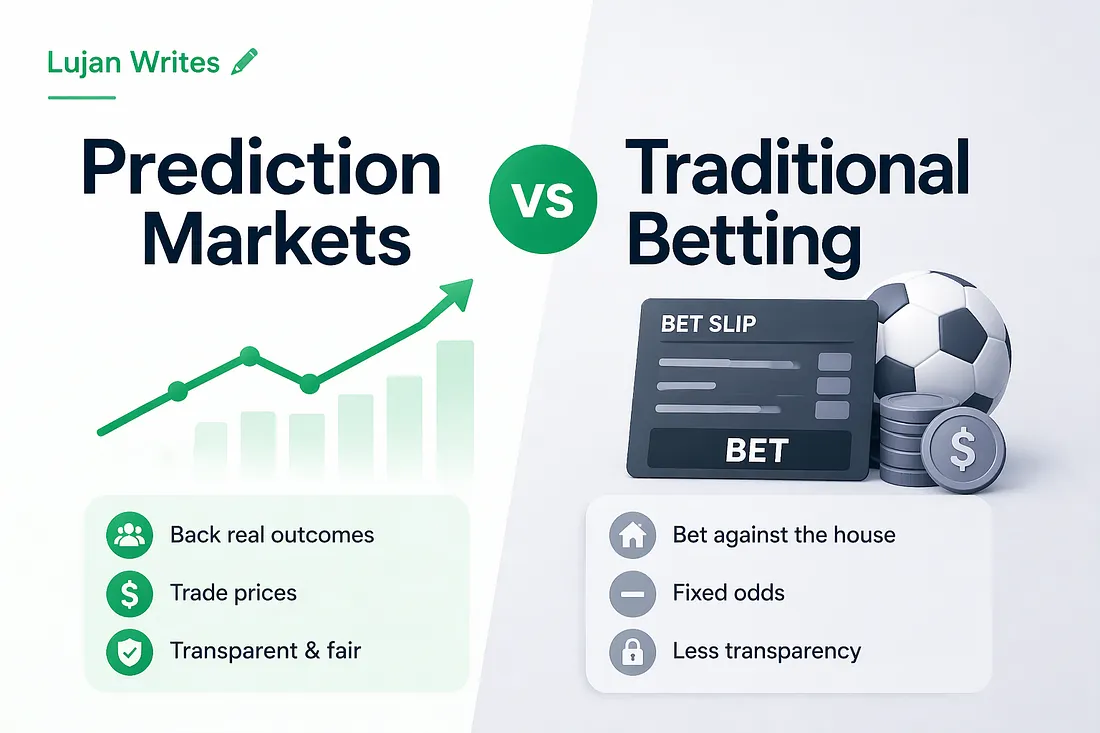
This is part II of the series “Lujan Writes For Prediction Markets Beginners”, which aims to explain the key differences between prediction markets and traditional sportsbooks. If you have never used these markets or are new to this, this series is for you!
>> Start your Polymarket journey here <<
The first time someone explained prediction markets to me, they said, “It’s like betting but smarter.” That’s both completely wrong and kind of right.
I’ve been using both sportsbooks and prediction markets for two years now. They serve different purposes, reward different skills, and frankly, attract different types of people. Understanding the difference between them isn’t just academic — it’ll save you money and help you pick the right platform for what you’re actually trying to do.
How the Odds Work
On DraftKings or Betika, the sportsbook sets odds based on its algorithms and adjusts them to balance its books. You’re betting against the house. They want roughly equal money on both sides so they can collect the vig regardless of who wins.
Polymarket and Kalshi work differently. There’s no house setting odds. You’re trading with other users. Prices move based on supply and demand, just like stocks. The platform just facilitates the exchange.
This difference matters more than you’d think. When Arsenal play Manchester City, a sportsbook might list Arsenal at 3.03. That number reflects what the book thinks will balance action, not necessarily what they think the true probability is.
On a prediction market, if Arsenal shares are trading at 37 cents, that means the collective wisdom of everyone trading thinks the Gunners have a 37% chance to win. No house edge, trying to balance books. Just raw market consensus.
You Can Change Your Mind
Here’s where things get interesting. Place a bet at a sportsbook, and you’re locked in until the game ends. Maybe they’ll offer a cash-out option, but it’s usually a terrible value designed to benefit them, not you.
Prediction markets let you exit whenever you want at the current market price. Buy Chiefs shares at 63 cents, and if some news breaks that makes them jump to 75 cents, you can sell immediately. You made 12 cents per share without waiting for the game.
I’ve made more money on early exits than I have on holding positions to resolution. When the market moves in your favor fast, there’s no shame in taking profit. Traditional betting doesn’t give you that option.
The Range of Markets
Sportsbooks cover sports and increasingly politics. That’s it. You want to bet on whether the Fed will cut rates? Will Bitcoin hit certain price targets? Which AI model will be rated best in December? Good luck.
Prediction markets cover everything that has a verifiable outcome. I’ve traded on Supreme Court decisions, movie box office results, tech company earnings, geopolitical events, and yes, sports too.
The diversity matters because it lets you leverage whatever you actually know about. Maybe you don’t follow sports, but you understand monetary policy. Maybe you work in tech and have insights about product launches. Prediction markets let you trade on that knowledge.
Fee Structures Tell You Everything
Sportsbooks build their profit into the odds. That -110 line means you’re betting $110 to win $100. The gap between the two sides is their cut. On moneylines and prop bets, that vig can reach 8–10% or higher.
Most prediction markets charge minimal fees. Polymarket takes 0.01% on trades. Kalshi charges $0.01-$0.02 per contract. You keep almost all your profits. The platform makes money on volume, not by building an edge into every line.
This difference compounds over time. If you’re an active trader making 50 bets a month, those sportsbook vigs add up to hundreds of dollars. The same activity on prediction markets costs a few bucks in fees.
Liquidity and Market Depth
Big sportsbooks can handle massive bets on popular games. Try to put $50,000 on a UCL match, and they’ll take it without blinking. That’s their business.
Prediction markets have variable liquidity. Major political events and trending crypto markets can handle big positions. But some niche markets are thin. You might not be able to buy $10,000 worth of shares without moving the price significantly.
For most retail traders, this isn’t an issue. If you’re working with a few hundred or a few thousand dollars, liquidity is fine. But if you’re trying to move serious size, sportsbooks handle it better.
Speed and Settlement
Sportsbooks settle fast. The game ends — winners get paid, usually within minutes. The infrastructure has been optimized for decades.
Prediction markets use oracles and verification processes. Most settle within an hour after the event resolves, but some complex markets can take longer. On rare occasions, disputes about resolution criteria can delay payouts.
The tradeoff is transparency. You can see exactly how the market resolved and why. Sportsbook settlements are black boxes — you just trust they graded it correctly.
Regulation and Geographic Access
US sportsbooks operate in 38 states plus D.C., with clear regulations and consumer protections. You know exactly what you’re getting and what recourse you have if something goes wrong.
Prediction markets are newer, and regulations vary. Kalshi operates as a CFTC-regulated exchange available nationwide. Polymarket left the US in 2022 but returned in 2026 with regulatory approval. The landscape is still evolving.
This regulatory uncertainty doesn’t mean prediction markets are sketchy, but it does mean you need to understand what protections exist in your jurisdiction.
Tax Reporting
Sportsbooks send you a tax invoice if you hit certain thresholds. The reporting is straightforward, and your tax software probably handles it automatically.
Prediction markets vary. Kalshi provides clear tax documents. Crypto-based platforms might require you to track capital gains yourself. If you’re trading actively, the tax situation gets complicated fast.
This isn’t a dealbreaker, but it’s worth knowing before you start.
Which One Should You Use?
If you want to bet on Sunday’s game and you just want it to be simple, use a sportsbook. They’re optimized for exactly that experience.
If you want to trade on your knowledge across multiple domains, if you value low fees and the ability to exit positions early, if you’re comfortable with slightly more complexity — prediction markets make more sense.
I use both. Sportsbooks for straightforward recreational bets on games I’m watching. Prediction markets for everything else, especially positions I plan to hold or trade actively.
The tools are different. Once you understand what each one does well, you can use them strategically instead of just defaulting to whatever platform you heard about first.
If you’ve made it this far, you’re exactly the kind of reader this series is written for. Follow Prediction Frontier on Medium, Substack, and Twitter for the next drop.