Michigan Court Temporarily Blocks Kalshi Sports Markets, Orders State-Compliant Geofencing
A Michigan court has temporarily barred Kalshi from offering sports-related event contracts in the state, requiring stricter geofencing and imposing a potential $120,000 daily penalty for non-compliance.
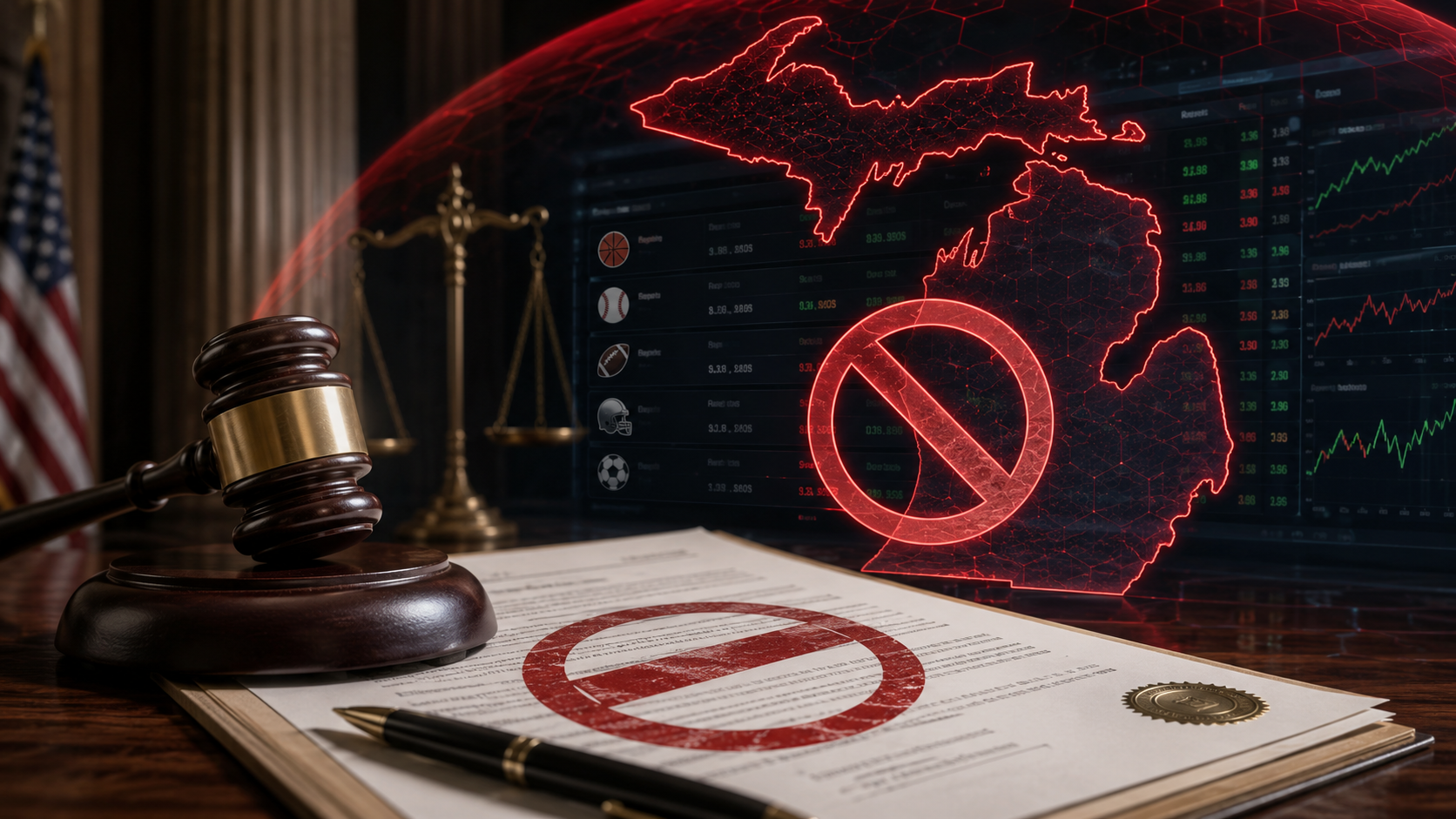
A Michigan judge has temporarily barred Kalshi from offering or promoting sports-related event contracts in the state, adding another significant state-level setback to the prediction market operator’s fight over whether sports contracts fall under federal derivatives law or state gambling rules.
In an order signed June 29, Ingham County Circuit Court Judge Rosemarie E. Aquilina barred Kalshi from conducting activity connected to internet sports betting in Michigan for 14 days, through July 13. The ruling requires the company to use a third-party geolocation provider capable of meeting the Michigan Gaming Control Board’s technical specifications.
The order does not appear to prohibit Kalshi’s entire platform in Michigan. Instead, it is directed at sports-related contracts and related activity, including offering, listing, matching, clearing, settling, advertising and accepting funds connected to products the court considers internet sports betting.
The court also prohibited Kalshi from allowing Michigan-based users to create, verify, fund or maintain accounts for the purpose of accessing or trading sports-related contracts. The restrictions extend to marketing activity, including websites, mobile applications, email, social media, affiliates, influencers and paid placements.
Judge Aquilina’s order frames Kalshi’s sports offering as “sports betting operation masquerading as an investment opportunity,” citing concerns around underage access, responsible-gambling protections, state tax revenues and the impact on licensed operators and tribal gaming interests.
Michigan’s legal online sports betting market is limited to users aged 21 and above, while Kalshi allows users aged 18 and older to trade on the platform. The court said the difference could create immediate and irreparable harm if Kalshi continued offering sports-related markets in the state.
Kalshi must now implement geofencing through a Michigan Gaming Control Board-licensed third-party provider, or propose an alternative provider licensed by another state gaming regulator for court approval. Failure to comply could trigger a fine of $120,000 per day.
The order’s footnote says that figure was calculated using what the court described as a conservative estimate based on Kalshi’s $600 million in daily trading volume, Michigan representing roughly one-fiftieth of transactions, and a 1% assumed fee rate.
Michigan Attorney General Dana Nessel filed suit against Kalshi in March, alleging that the exchange was operating unlicensed online sports betting under the label of event contracts. The case was briefly moved to federal court after Kalshi sought removal, but was sent back to the Ingham County Circuit Court last week.
The Michigan Gaming Control Board has argued that Kalshi avoids the licensing, tax and responsible-gambling obligations imposed on licensed sportsbooks, including self-exclusion tools, deposit and wagering limits, and direct links to gambling-addiction resources.
Kalshi plans to challenge the ruling, according to Reuters. The company has consistently argued that its event contracts fall under the exclusive jurisdiction of the Commodity Futures Trading Commission rather than state gaming regulators.
The Michigan order adds to the increasingly fragmented legal environment facing prediction markets in the United States. Reuters reported that Michigan is the second state, after Nevada, to secure a court-ordered restriction on Kalshi’s sports offering, while a similar injunction in Massachusetts has been paused during Kalshi’s appeal.
For Kalshi and the broader prediction markets sector, the immediate consequence is clear: federal regulation alone is not yet insulating sports-event contracts from state-level gambling enforcement. The longer-term question remains whether courts will ultimately treat these contracts as federally regulated derivatives, state-regulated gambling products, or a category requiring a new regulatory framework altogether.