Prediction Frontier Weekly Is Back. Here’s What We’ve Been Building.
Sports are still driving much of the activity. But the conversation is moving towards market infrastructure and whether prediction markets can support real institutional use.

It’s been four weeks since the last Prediction Frontier Weekly. We spent most of that time in the trenches, refining what we’re building and digging into the question that followed the World Cup: what comes next?
Sports are still driving much of the activity. But the conversation is moving towards market infrastructure and whether prediction markets can support real institutional use.
Can Prediction Markets Transfer Real Commercial Risk?
We spent much of the break on a narrower question: can prediction markets do more than price public beliefs? Can they also transfer real commercial risk?
To test that, we’ve begun measuring whether event contract markets have enough liquidity to absorb corporate hedges.
Our initial research focuses on economics and macro markets on Polymarket. Three findings stand out so far:
Of the 792 markets that met our criteria from an initial sample of 4,427, only 1.01% could absorb a $10,000 payout position within one cent of the midpoint. None could support a $1 million hedge within 10 cents.
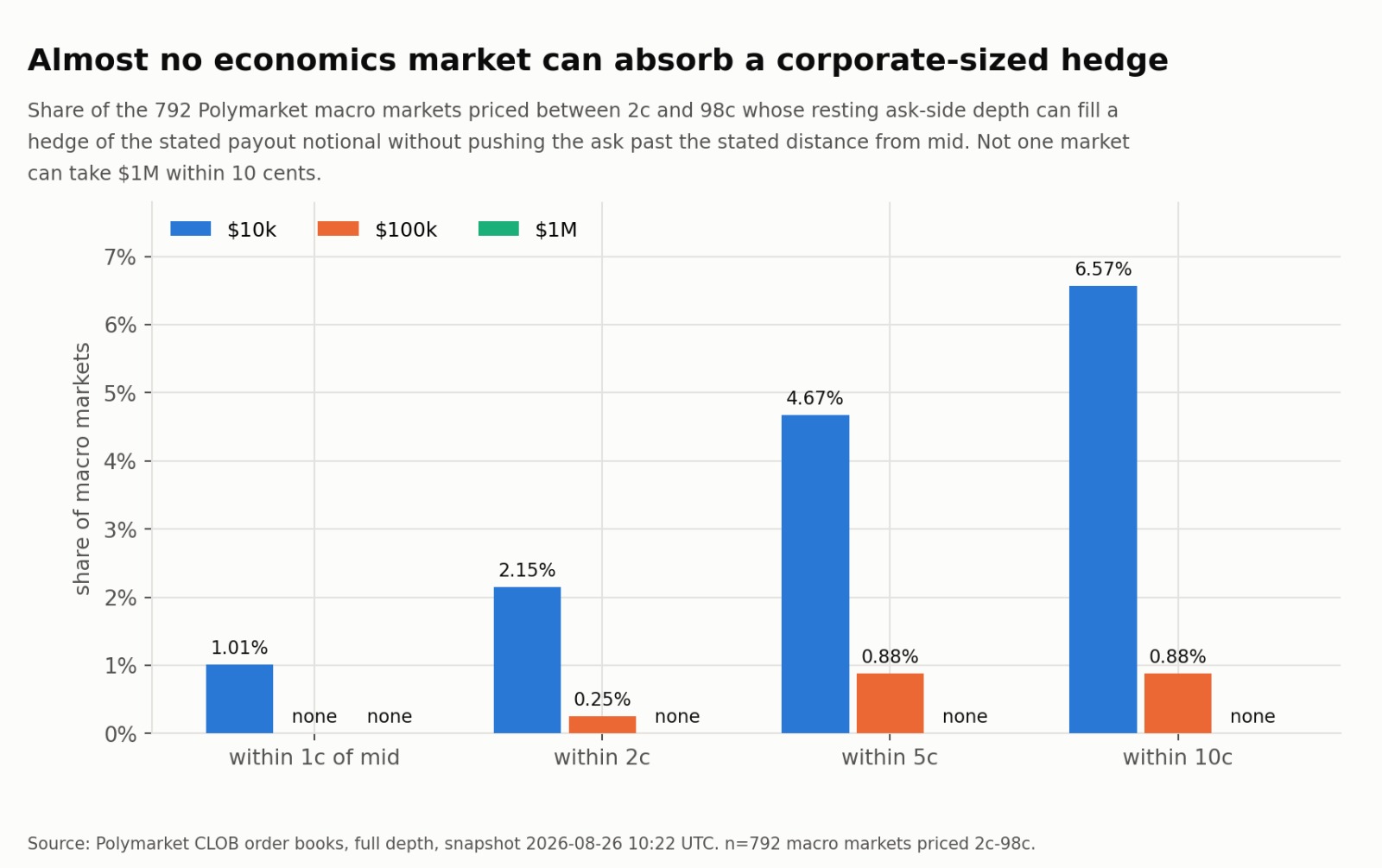
Image Source: Prediction Frontier Research
$3.44 million of payout notional was available within five cents of the midpoint. That looks substantial until it is tested at the individual-market level. The liquidity is spread across 792 unrelated contracts and cannot be combined to hedge a single commercial exposure.
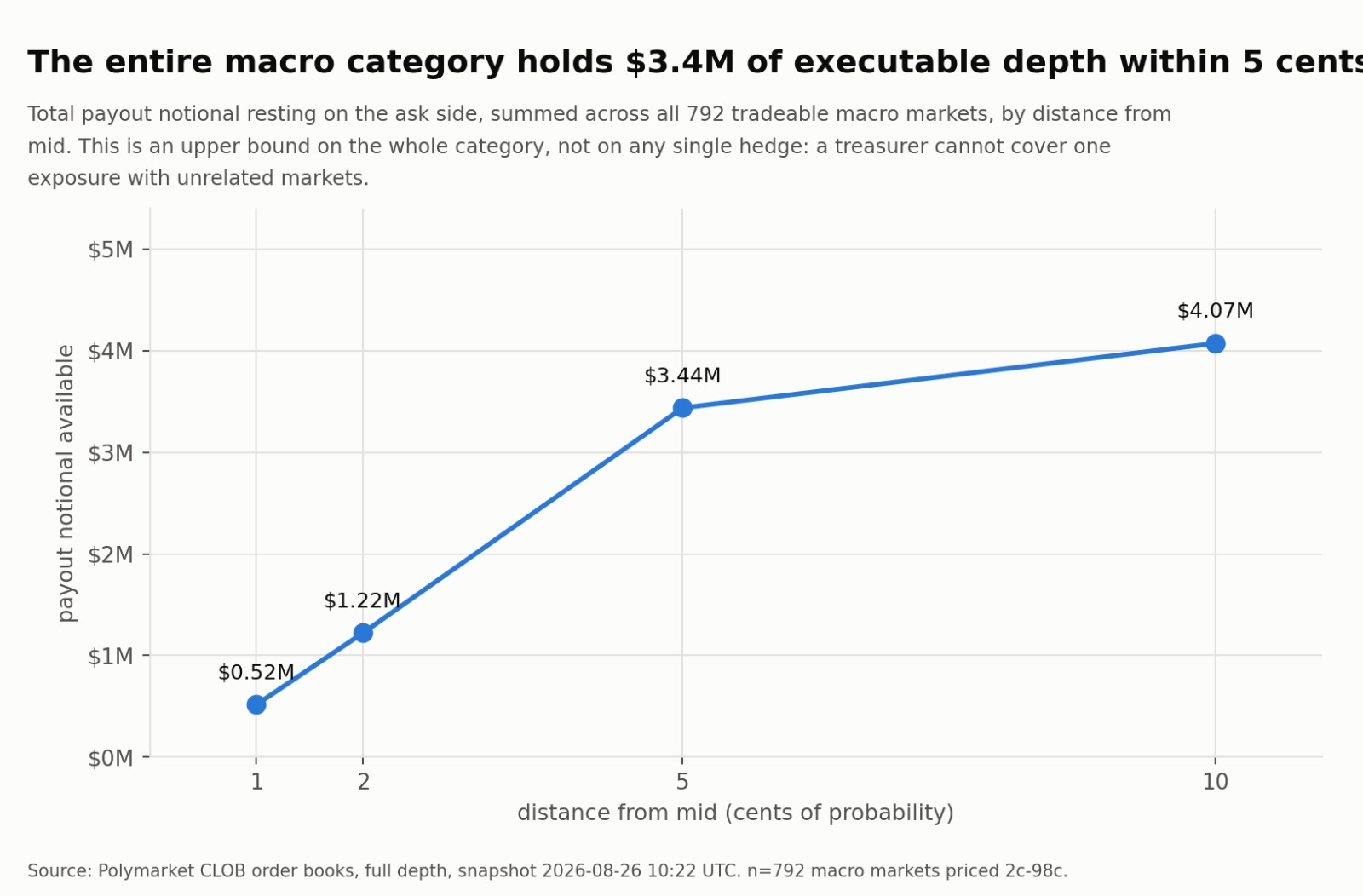
Image Source: Prediction Frontier Research
Liquidity is also heavily concentrated within the macro category. Five of the 792 qualified markets hold 43% of total ask-side depth, while the top 25 account for 75%.
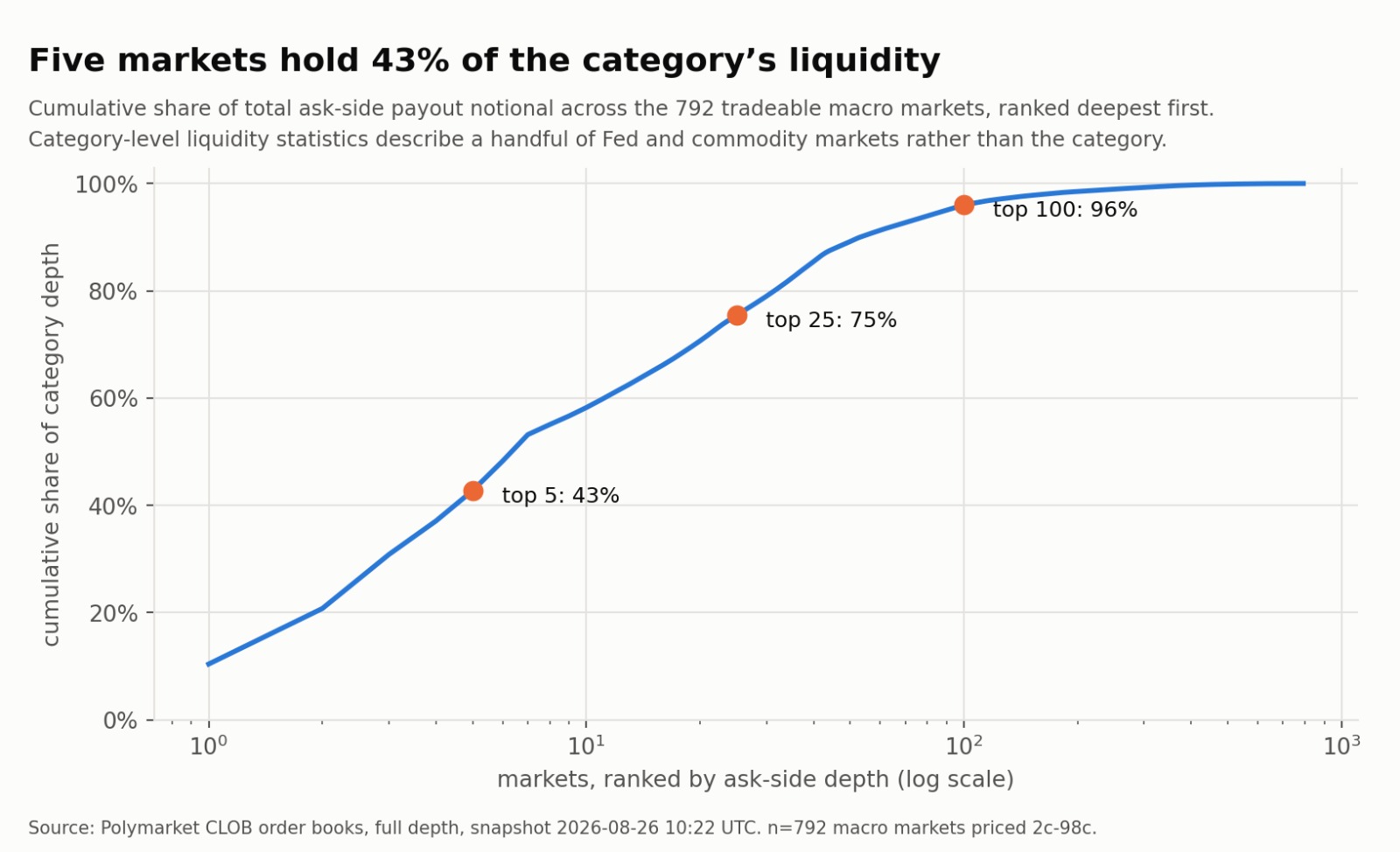
Image Source: Prediction Frontier Research
These findings do not mean prediction markets cannot support institutional transactions. This week, Greenlight brokered Kalshi’s first weather-based block trade. Risk-management startup Discrete took a position tied to Houston reaching 103°F by the end of August, with a potential payout of $25,000.
For now, the larger trades rely on bespoke contracts, private negotiation, brokers and professional liquidity providers rather than public order-book depth alone. The next test is whether this model can move beyond individual transactions and become repeatable across a wider range of corporate risks.
Prediction Market Regulation Is No Longer a US-Only Story
The same event contract can be treated as a derivative, a gambling product, a restricted service or something regulators have yet to address, depending on where the user is.
We kept running into the same problem while reporting on these decisions: the information was scattered across regulatory notices, court filings and local coverage. There was no single view of where each country stood, so we decided to build one!
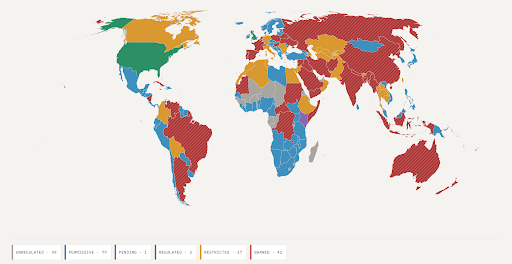
The Prediction Frontier Global Tracker currently classifies 201 jurisdictions: each country page carries the public basis for its status, and the map can be searched or filtered by classification.
Some of those labels will change as we continue updating. Explore the Global Prediction Market Tracker →
What We’re Building Next
Prediction Frontier is becoming a more focused research and intelligence platform for the prediction market industry. News will remain part of what we do, but our work will increasingly examine the data, infrastructure, regulation and commercial use cases developing beneath the headlines.
Here is what to expect:
The Prediction Frontier Weekly: A concise review of what changed, what the market data shows and which developments deserve closer attention.
A weekly data brief: Recurring analysis of liquidity, market quality, trader activity and unusual information flows.
Deeper research: More work on market making, corporate hedging and the infrastructure required for prediction markets to support larger transactions.
Better market and policy coverage: Our Global Policy Tracker now covers 201 jurisdictions, while the Markets section brings together active contracts, prices, volume and expiries. The markets page is still early and will improve incrementally.