Better Collective adds Kalshi and Novig to Playbook
Better Collective reports a six-figure trade count through Playbook as prediction-market customer acquisition supports its publishing business.
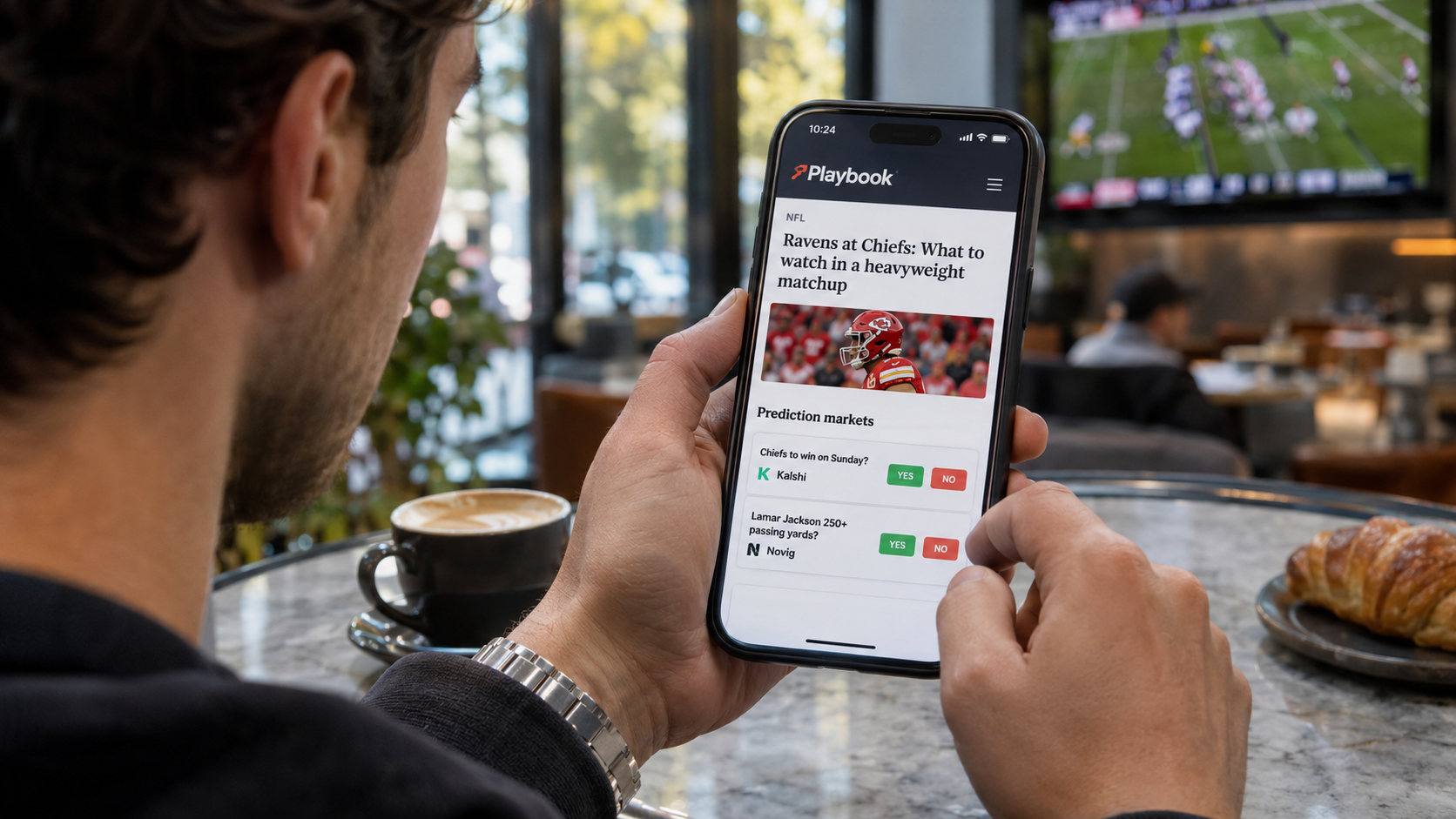
Better Collective has added Kalshi and Novig single and combo markets to Playbook, letting readers move from sports content to partner platforms with selections already loaded. The company announced the integrations on 18 November and reported a “six-figure number of trades” sent through the product.
The release dates the integration to mid-October. It gives neither an exact trade count nor a definition establishing whether that figure measures completed executions or selections delivered to partners. It should therefore not be read as a disclosed number of funded customers or dollars traded.
Combos extend an existing distribution product
Kalshi and Novig are Playbook’s first prediction-market partners. Better Collective says parlays and combos account for more than 90% of the product’s bet-slip clicks to date. That percentage covers Playbook overall; it is not a disclosed prediction-market volume share.
The commercial importance is the route from a sports story to a trading decision. A pre-loaded selection removes steps between reading about an event and opening the corresponding market. Whether that produces lasting customers depends on what happens after the referral.
Q3 results show the acquisition business growing
In its third-quarter report released on 18 November, Better Collective said Publishing segment cost-per-acquisition revenue rose 93% to €6.953 million, supported by demand from North American prediction-market partners. That is segment CPA revenue, not a separately disclosed prediction-market revenue total.
The report says prediction-market commercial agreements are primarily structured on a CPA basis. This makes customer acquisition a useful measure to watch alongside trading activity: a media partner can earn for delivering customers without necessarily participating in their subsequent trading fees.
There is an unresolved timing difference in the documents. The Q3 report describes Kalshi and then Novig launching during the quarter ended 30 September, whereas the separate integration release specifies mid-October. The documents reviewed do not explain the difference.
For Novig, the media integration follows its reported sponsorship agreements with seven NHL clubs. These are different distribution channels: one places the brand around teams, while the other connects sports content to a market selection. The disclosures do not establish how their acquisition costs or customer retention compare.